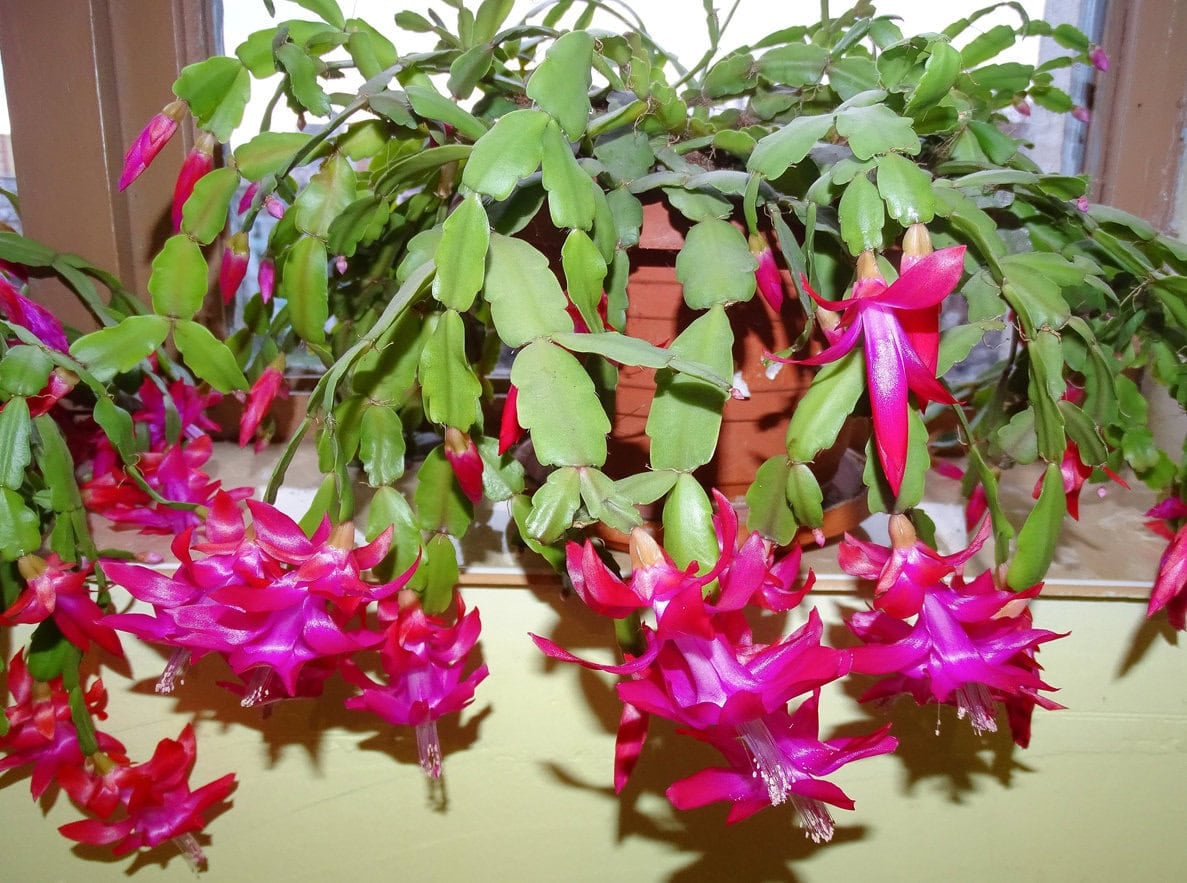
Accept the truth. Your Christmas Cactus looks up to Meryl Streep. Both are highly talented and both have very specific requirements before they deliver a show. Your cactus’s potential for glory is 80% placement, and the other 20% is you not touching it.
Besides, it’s not the only one that cares about its (indoor) zip code, so no judgment. Get the placement right, and the Meryl Christmas performance will finally begin.
Why Darkness is the Best Diet

Your Christmas Cactus is technically a short-day plant. It’s not tracking the calendar or listening to holiday music and ads selling jewelry and perfumes. It monitors exactly how many hours of daylight it gets compared to the hours of uninterrupted night.
What Works For Me:
I give mine a true 12-14 hours of darkness every night in the fall. No lamps, no hallway lights, nothing! And it’s the one habit that reliably triggers buds for me every single year.
The “Go Time” signal for blooming is only triggered when the night is 12 to 14 hours long. No interruptions whatsoever. You see where this leads.
If a table lamp, a street light, or even a blinking modem light breaks that required darkness (even for just a few minutes!), it can reset its internal clock. The plant wakes up like a toddler as soon as you twist the doorknob and the entire blooming countdown can get set back to zero..
The plant figures that if the nights are short, it’s still summer, so it keeps pushing out green but boring growth instead of beautiful blooms. In short, you turn off a light switch just right, you flip the plant’s chemical switch from grow mode to bloom mode.
If yours already looks washed out, this guide explains exactly why Christmas cactus segments turn pale or faded and what you can do about it.
The Sunscreen Policy

It’s time to be brutally honest about light. Many new plant parents assume “bright” means “shoved directly onto a sunny windowsill because there’s so much space there,” and that’s a fatal mistake.
What Works For Me:
I keep mine in an east-facing window where it gets bright morning light but zero harsh afternoon sun. Ever since I stopped letting it roast on a south windowsill, the segments stayed green and the buds actually held on.
Your cactus is a tropical girl, but it comes from the understory of the jungle canopy and prefers filtered, gentle beams. No paparazzi of direct afternoon sun.
Too much exposure? The segments bleach to a pale, sickly yellow. The sensitive little buds? They dry up and drop before they even get a chance to open.
To win this light game, you are seeking the Goldilocks Zone: bright but indirect. East-facing windows let through perfect morning rays strong enough to signal “grow” but not harsh enough to damage the foliage.
A North-facing window works in a pinch. You might get a low-key flower show, nothing flamboyant. And if you really must use a South or West exposure, fit that window with a sheer curtain.
And if your buds are already falling off, here’s why Christmas Cactus drop buds and how to stop it.
Finding the Forever Home

You might think all locations are equally convenient, but most are zones of instant bud drop, like a spot near any heat source.
What Works For Me:
I avoid every chaotic spot in the house (no heaters, no vents, no icy windows) and the moment I gave my cactus a calm, steady corner, the buds actually stayed put.
The dry, inconsistent heat near a radiator, heater, or fireplace sucks the necessary humidity right out. Conversely, drafty entryways or next to windows that get icy cold are also stressful.
The same applies to air conditioners. Do not put your cactus beneath an AC vent or perched atop a warm appliance. Why not? The air currents there constantly flip between hot and cold, and temperatures fluctuate wildly. Your cactus hates that chaos more than I do reality shows.
If your plant already looks limp or deflated, here’s a full guide on why a Christmas cactus wilts and how to fix it.
The Heat is… On
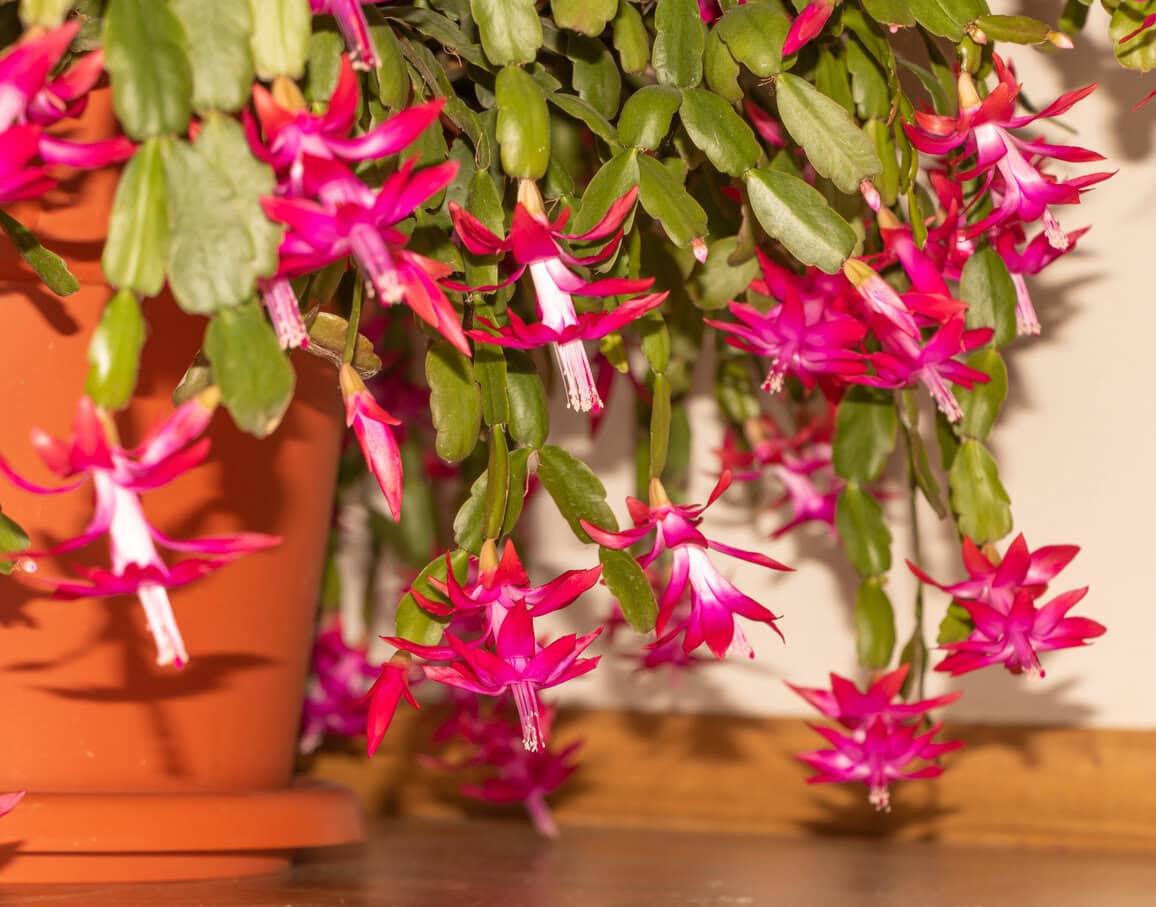
As famous florist Glenn Frey used to say, Tell me, can you feel it? Oh-ooh-oh-oh because your cactus does. And that’s the entire problem. No proper temperature range, no buds.
What Works For Me:
I move mine to a cooler room in the fall and let the temperature drop a bit at night. The second it feels that temperature dip, the buds appear like clockwork.
If your Schlumbergera sweats above 70ºF (21°C) instead of enjoying the ideal 55-65°F (13-18°C), the plant tends to stay in growth mode instead of forming buds. The other extreme doesn’t work either.
Why does it all happen? The heat tells the plant to stay in summer growth mode. The cold will stress it, turn it limp and pale, and it will look utterly desperate, like my husband with a mild case of the sniffles.
Good news? A slight dip in temperature at night is the secret trigger. That nightly coolness signals that the season is changing. You finally speak cactus now!
Temperature is just one of several bloom-blockers. Here are seven more reasons a Christmas cactus won’t bloom and how to fix them.
Light Needs All Year Round

I suppose you didn’t plan to become a lighting technician when you started growing a Christmas Cactus. Yet here you are and here are your tips.
What Works For Me:
I let mine bulk up outside in bright, indirect light all spring and summer, then move it to a cooler room in late September. That shift, plus the longer nights, is what reliably kicks the buds into gear.
During spring and summer, the plant is focused on green growth. It needs bright yet indirect light to get fit for the big show so it bulks up its segments.
Then, as late September rolls around, you must move it to the chillier room and rely on naturally longer nights to kickstart bud setting.
Finally, during November and December (showtime!), the light needs to be consistent. You have worked too hard for this! Don’t relocate the plant just to show it off. Let admirers come to it instead.
If you like having a month-by-month routine, my Christmas Cactus Care Calendar breaks down exactly what to do each season.
The Sacred Rules of Bud Stability

What’s all the fuss with cactus relocation and bud drop anyway? When you move it, you break three important, interconnected environmental seals.
1: Light Change
Once the plant sets buds, every segment is photosynthesizing based on the exact direction the light is coming from. The cactus has allocated resources based on that specific light path. You move it a bit, it senses an unnatural change in the amount or direction of light hitting its cells. Panic. Bud drop.
2: Temperature Change
Your cactus thrives in its current spot because it established a perfect pocket of temperature and humidity. You move it, you expose it to new microclimates, it senses a shift in heat consistency. Panic. Bud drop.
3: Prioritizing Survival
And then there’s just plain hormonal response. The plant’s immediate albeit dramatic response to sudden environmental change is to prioritize survival. Since flowers are metabolically expensive, you move it, it releases a stress hormone. Panic. You know what happens.
Keeping the soil evenly moist also plays a big role. Here’s how to water a Christmas cactus properly without risking rot or stress.
Christmas “You Can’t Touch This” Cactus
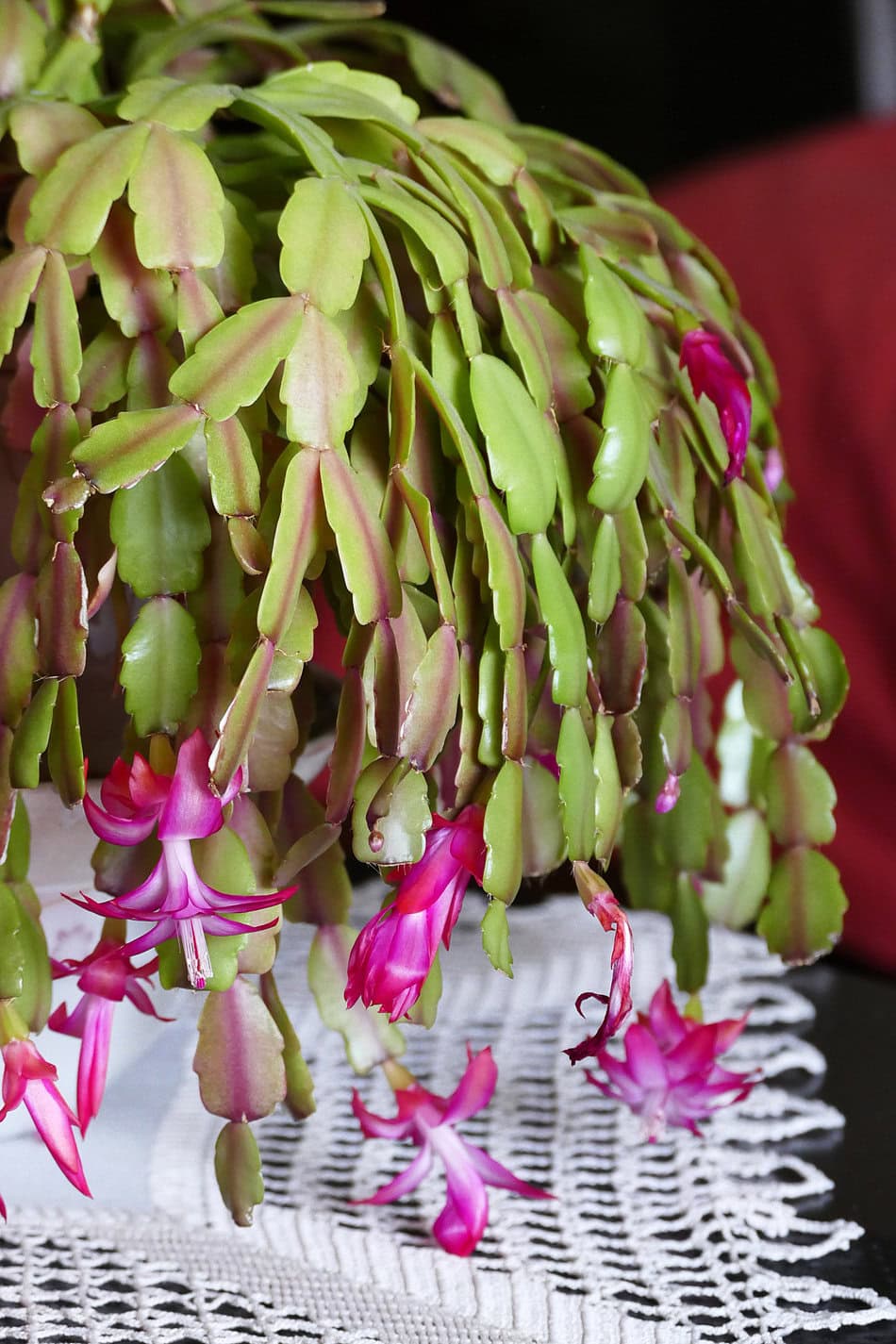
Consider this the ultimate test of willpower. Once you see the tiny buds, your job’s over. What’s not over (and always seems only to grow) is a list of don’ts:
Got a shameful story of bud loss? Share your disaster with me, so other plant parents can learn from our collective restraint failures.
Save the handling for after bloom season. If you’re planning ahead, here are the signs it’s time to prune your Christmas cactus, but wait until the flowers fade.
The Holy Trinity of Bud Success
You got it. There’s nothing left to share except a few quotes from famous horticulturalists, West, “Give me light, give me light… but preferably from the East,” Mercury, “I want to break free… of anything above 65 degrees Fahrenheit (aka 18°C),” and Timberlake, “What goes around, comes around… so stop rotating the pot.”
Once you’ve mastered the Holy Trinity, the only thing left that can sabotage your blooms is pests. Take a look at the Christmas Cactus Pest Watchlist so you know what to look for.